

Mount Rainier Mountain Guides
Guided Mount Rainier summit climbs and AIARE avalanche courses — the Pacific Northwest's biggest glaciated volcano, rising to 14,410 feet above the Cascades.
At 14,410 feet, Mount Rainier (Tahoma) is the most glaciated peak in the Lower 48 and the classic Pacific Northwest mountaineering objective — a genuine high-altitude glacier climb with crevasses, big elevation gain, and real weather. Summiting it is a serious, rewarding undertaking, and a benchmark for aspiring alpinists.
We guide the mountain with small teams on the quieter, more aesthetic routes, and teach the glacier and altitude skills you need along the way.
What we guide on Rainier
Glacier Mountaineering
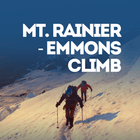
A guided summit climb via the Kautz or Emmons Glacier — small teams, crevasse navigation, roped glacier travel, and the skills to get you to the top and down safely. A 4-day program built around acclimatization and conditions.
AIARE Avalanche Education
Learn to travel safely in avalanche terrain in the Rainier zone. See our full AIARE avalanche courses guide for how the levels fit together.
Want a custom date, a private rope team, or a different route? We run private and custom trips on Rainier — just tell us your goal.
Routes & terrain
The Kautz Glacier is our primary route — a more aesthetic, less crowded line than the standard Disappointment Cleaver, with a short section of moderate ice. The Emmons Glacier, the largest glacier in the Lower 48, is the classic northeast-side route from Camp Schurman. Both finish on the crater rim at 14,410 feet, and both ask for genuine glacier travel, fitness, and altitude tolerance — all of which we coach on the climb.
When to go
Spring
Early summit season with firm snow and good conditions on the Kautz and Emmons.
Summer
Prime summit season — the classic window for a guided Rainier climb.
Early fall
Late-season climbs with fewer crowds before winter sets in.
Avalanche & skills
AIARE courses and training days when the volcano is in full winter conditions.
Why guide with us
Small teams, the quieter Kautz and Emmons routes, and certified AMGA guides who coach you through glacier travel and altitude rather than just hauling you up. You'll come away a more capable mountaineer, ready for the next objective.
Mount Rainier FAQ
How hard is it to climb Mount Rainier?
Rainier is a serious, high-altitude glacier climb — big elevation gain, crevasses, thin air near 14,410 feet, and real weather. It's achievable for fit, determined people with a guide, but it demands strong fitness and the willingness to learn glacier travel, which we teach on the trip.
What route do you climb on Mount Rainier?
We guide the Kautz Glacier (our primary line — quieter and more aesthetic than the standard Disappointment Cleaver, with a short ice section) and the Emmons Glacier (the big northeast-side classic). Both top out on the summit crater rim.
How long does it take to climb Mount Rainier?
Our guided Rainier summit climb is a 4-day program, which allows time to learn skills, move to high camp, acclimatize, and have a realistic summit window with a weather buffer.
Do I need experience to climb Rainier?
Prior glacier or altitude experience helps, but fit beginners regularly summit with a guide — we teach the roped glacier travel, cramponing, and self-arrest on the climb. What matters most is excellent fitness and commitment to a long summit day.
Do you need a permit to climb Mount Rainier?
Yes — Mount Rainier National Park requires a climbing cost-recovery fee and (on popular routes) advance camp reservations. We handle the permits and logistics with you before the trip.
When is the best time to climb Mount Rainier?
June through August is the prime, most reliable window. Late May and early June offer firm spring snow, and September brings quieter, late-season conditions.
Let's get you up Rainier
Tell us about your fitness and experience and we'll help you plan a guided Mount Rainier climb or a custom date.